Dog training is one of the best investments you can make in your pup's well-being. Whether you're dealing with anxiety, aggression, or just want a well-mannered companion, training plays a key role in shaping a happy, confident dog.
Can dog training help with anxiety?
Yes. Training provides structure and consistency, which helps anxious dogs feel more secure. Many dogs are anxious because they're uncertain about their environment or what's expected of them. Obedience work, impulse control and confidence-building activities teach them to manage stress better.
Positive reinforcement and desensitization can also make scary situations — vet visits, loud noises — far less stressful over time.
Can dog training help with aggression?
Absolutely, but it helps to understand that aggression is usually a symptom of fear, frustration or missing socialization. A structured plan addresses the root cause through impulse control, proper socialization and trust-building.
Professional trainers use techniques like counter-conditioning — changing a dog's emotional response to triggers — alongside structured obedience. If your dog shows signs of aggression, work with a professional trainer or behaviorist to keep training safe and effective.
Why is dog training important?
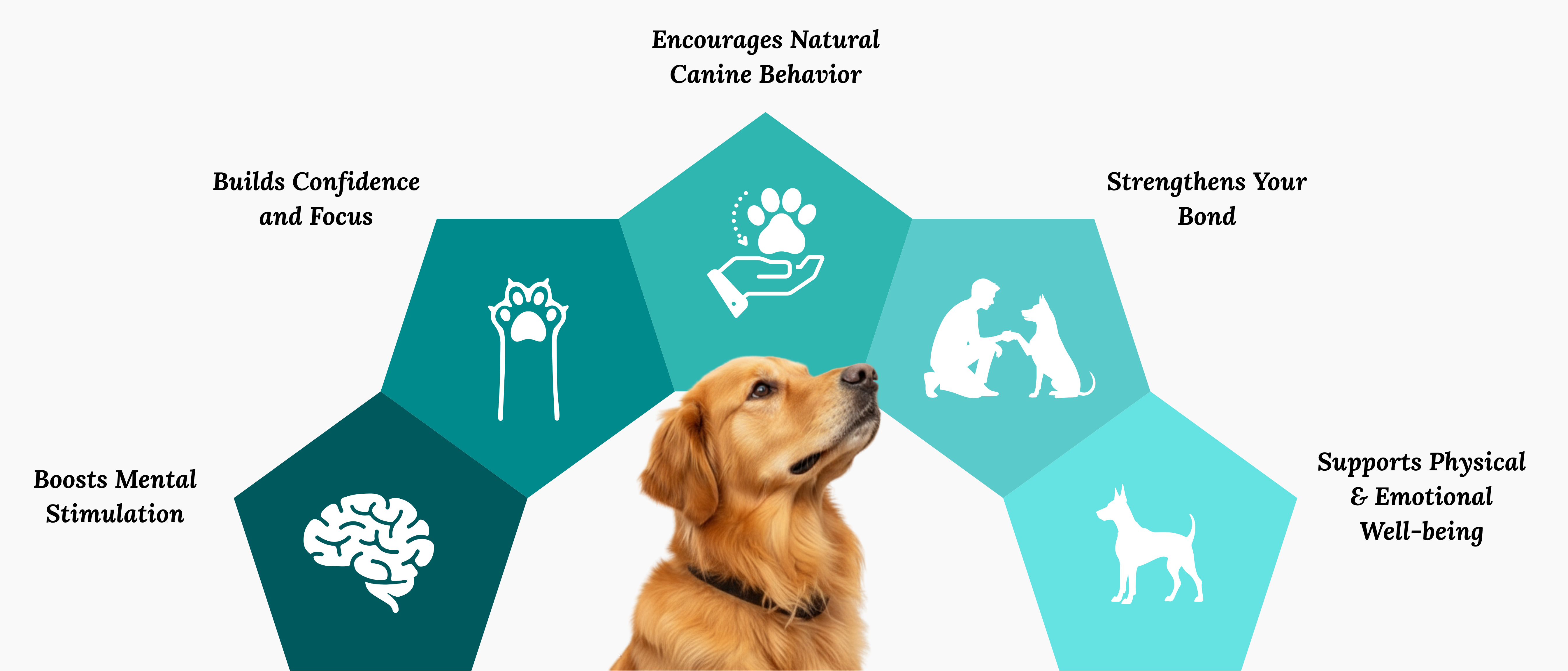
Training goes beyond teaching tricks — it's about communication, safety and the bond between you and your dog.
- Safety: a trained dog is less likely to bolt into traffic or react badly to strangers
- Better behavior: prevents excessive barking, jumping and destructive chewing
- Socialization: teaches appropriate interaction with people and animals
- Confidence: structure makes dogs feel secure and reduces fear-based behavior
- Stronger bond: training creates a shared language and builds trust
When should training begin?
The earlier the better. Puppies can start as early as 8 weeks with simple commands like sit, stay and name recognition, plus early socialization to new people, places and experiences.
That said, training isn't just for puppies. Older dogs may take longer to unlearn habits, but with patience and consistency they thrive just as much as a young pup.
What does dog training cost?
Cost depends on the type of training, your dog's behavior and the trainer's experience. Most comprehensive programs start around $1,400 and go up based on your dog's needs. We offer several payment plan options to break the cost up.
It's an upfront expense, but proper training saves time, stress and money by preventing costly behavioral problems later.
Ready to start?
Whether you're working on anxiety, aggression or basic manners, a well-trained dog is a happier, more confident companion. Ask us about a free training assessment and we'll build a plan around your dog.
Questions about your dog?
Our Santa Rosa team is happy to help — call or stop by for a tour.